 Merken
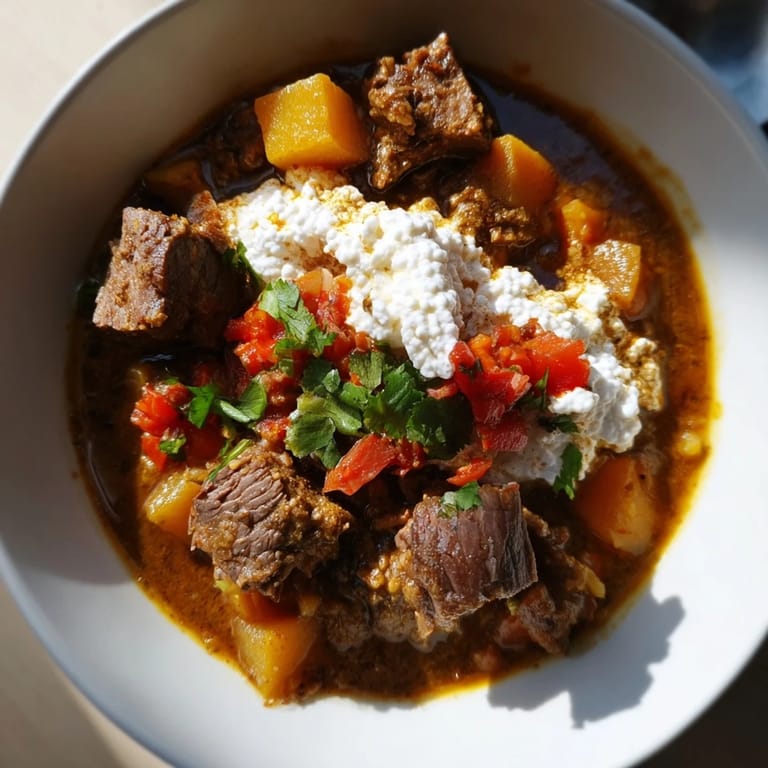
 Saltah arrived in my kitchen on a rainy afternoon when a Yemeni friend casually mentioned how her grandmother layered spiced meat, softened bread, and whipped fenugreek into one bowl, letting each person mix their own story into it. She described the ritual of waiting for the hulbah to foam just right, how the kitchen would fill with that warm, earthy fenugreek smell, and suddenly I understood this wasn't just a stew—it was an edible conversation. The first time I made it, I nearly over-whisked the fenugreek and called her in panic; she laughed and said imperfection was the point. Now when that foam forms under my whisk, I think of her kitchen and the way she'd watch it transform with such quiet satisfaction.
I made this for my partner on a quiet Tuesday night after they'd had a particularly long day, and watching them taste it—the way they closed their eyes and went back for another bite—reminded me why food matters. They said it tasted like home, even though it was their first time having Saltah, which is maybe the highest compliment a bowl of stew can get.
Ingredients
- Beef or lamb, 500 g cut into 2 cm cubes: The size matters here because you want chunks substantial enough to stay tender but small enough to soak up the broth; lamb gives a deeper flavor but beef is equally forgiving.
- Vegetable oil, 2 tbsp: Just enough to let the onions and meat brown properly without the pot becoming greasy.
- Large onion, finely chopped: This builds your flavor foundation, turning golden and sweet as the base for everything else.
- Garlic, 3 cloves minced: Add it after the onions are soft or it will burn and taste bitter instead of rich.
- Medium tomatoes, 2 chopped: Fresh ones make a difference, but canned work beautifully if that's what you have.
- Green chili, 1 finely chopped (optional): This is where you control the heat; leave it out entirely if you prefer gentle spice.
- Medium potato, 1 cubed: It breaks down slightly, thickening the broth while adding body.
- Medium carrot, 1 diced: A small sweetness that balances the spices.
- Water or beef broth, 4 cups: Broth deepens everything, but water lets the spices shine in their own way.
- Ground cumin, 1/2 tsp: Warm and slightly nutty, the foundation of the spice blend.
- Ground coriander, 1/2 tsp: A subtle citrus note that lifts the whole pot.
- Ground black pepper, 1/2 tsp: Don't skip this; it's not just heat, it's brightness.
- Ground turmeric, 1 tsp: The color and earthy backbone of the stew.
- Ground fenugreek, 1/2 tsp: A small amount in the stew itself, then more whipped for the topping.
- Salt, 1 tsp or to taste: Season as you go, tasting near the end when flavors have melded.
- Ground fenugreek seeds, 2 tbsp for hulbah: This is where the signature happens; soaking and whipping transforms it from bitter powder into something almost creamy.
- Water, 1/3 cup plus more for soaking: Cool water is essential for whipping the fenugreek into foam.
- Small tomato, 1 finely diced: This goes into the hulbah, adding freshness and acidity to cut through the richness.
- Small bunch cilantro, chopped: Bright and herbaceous, it's what makes people sit up and notice.
- Green chili, 1 minced (optional): For the hulbah topping, adding a subtle kick at the end.
- Lemon juice, from 1/2 lemon: This is your finishing touch, the thing that makes everything taste more like itself.
- Yemeni flatbreads (malawah or lahoh), 2 large: These are what catch all that wonderful broth; pita or naan work if you can't find the traditional versions, though there's something special about malawah's layered texture.
Tired of Takeout? 🥡
Get 10 meals you can make faster than delivery arrives. Seriously.
One email. No spam. Unsubscribe anytime.
Instructions
- Brown your base:
- Heat oil in a large pot over medium heat and let the onions soften until they turn golden and sweet, about five minutes. You'll notice the smell shift from raw onion to something deeper and caramelized; that's when you know you're ready for the garlic and meat.
- Build layers of flavor:
- Add minced garlic and chili, then your meat cubes, letting them brown on multiple sides so they develop a crust that keeps the juices locked inside. This takes about eight to ten minutes and is worth the patience.
- Marry the spices:
- Stir in your tomatoes, potato, carrot, and all the spices—cumin, coriander, black pepper, turmeric, ground fenugreek, and salt. Let this cook for about five minutes, stirring occasionally, so the spices bloom and warm through.
- Simmer until tender:
- Pour in water or broth, bring everything to a boil, then reduce to a low simmer, cover, and leave it for one to one and a half hours until the meat is so tender it almost falls apart and the vegetables have softened completely. Taste and adjust seasoning near the end.
- Prepare the fenugreek foam:
- While the stew simmers, soak ground fenugreek seeds in cold water for about an hour to soften them and reduce their bitterness. Drain carefully, then whisk or beat with a fork until a light, fluffy foam forms—this is the magic that people will be amazed by.
- Finish the hulbah:
- Fold diced tomato, fresh cilantro, minced chili if using, lemon juice, and a pinch of salt into your whipped fenugreek, tasting as you go to make sure the lemon brightness comes through.
- Assemble the bowl:
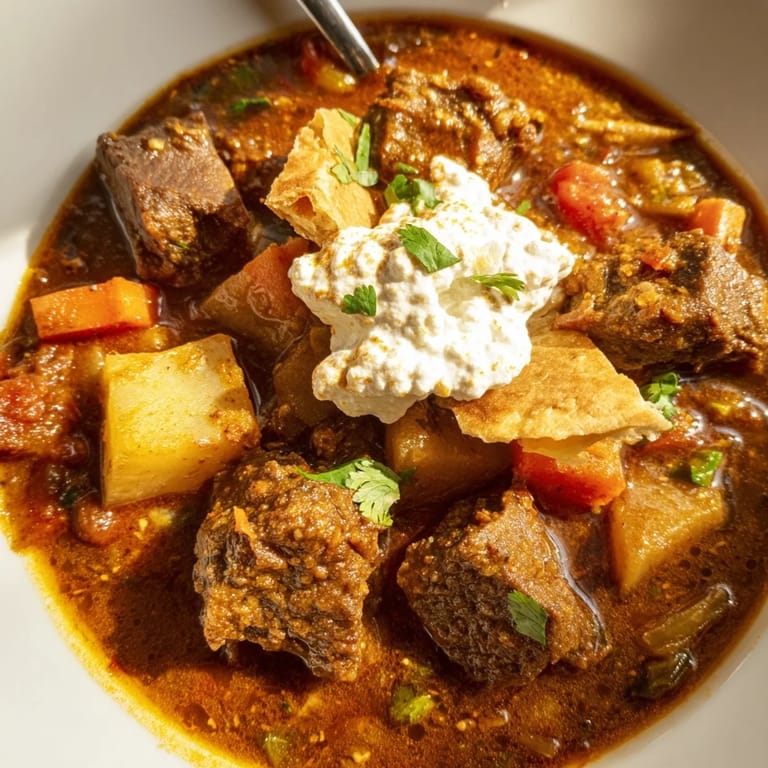
- Tear flatbread into bite-sized pieces and scatter across the bottom of your serving bowls. Ladle hot stew over the bread—enough to soak it but not drown it, so there's still some texture underneath all that warmth.
- Crown with hulbah:
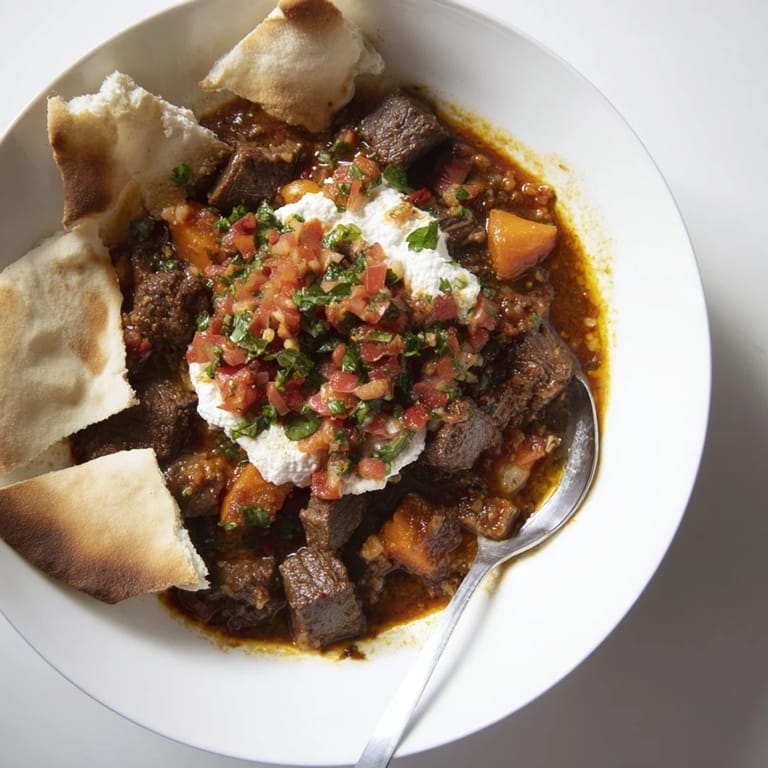
- Spoon a generous layer of the fenugreek foam on top of each bowl, letting it sit golden and inviting. Serve immediately while everything is still hot, and let people mix the layers themselves as they eat.
 Merken
 There's a moment in the cooking process—usually right when the fenugreek foam becomes impossibly fluffy and you catch that distinctive warm smell filling your kitchen—where you feel less like you're following a recipe and more like you're participating in something that matters. That's when Saltah stops being instructions on a page.
Understanding the Three Layers
Saltah is architecturally interesting because each element has a purpose and a personality. The bread at the bottom is your grounding, soft and yielding as it absorbs all the liquid. The stew in the middle is your warmth and substance, full of tender meat and vegetables that have been coaxing flavor out of each other for ninety minutes. The hulbah on top is brightness and surprise, that moment of earthiness mixed with lemon and cilantro that makes your palate wake up. When you eat Saltah, you're not supposed to finish one layer before moving to the next; you're meant to mix as you go, letting flavors collide and dance together.
The Art of Making Hulbah
The fenugreek topping is the part that intimidates people most, but it's actually the most forgiving once you understand what's happening. You're not cooking it, you're reviving it—taking a bitter powder and transforming it through hydration and aeration into something almost creamy and complex. The whisking is meditative; your arm might get tired but your mind quiets down. Some people use an electric mixer, but there's something about doing it by hand that makes you present for the transformation, that moment when the liquid suddenly becomes foam.
Variations and Flexibility
Saltah is forgiving enough to adapt to what you have on hand and what you're craving. If you want to vegetarianize it, just omit the meat and add more potatoes, chickpeas, or fava beans to keep the protein and heartiness intact. Some people add a spoonful of zhug (a Yemeni cilantro hot sauce) on the side for those who want extra heat and brightness. If you can't find malawah, honestly, good flatbread is good flatbread—naan will work, pita will work, even a thick sourdough torn into pieces has done the job beautifully. The spirit of the dish is about comfort and flexibility, not rigidity.
- Make the stew a day ahead and reheat gently; it tastes even better as flavors settle and deepen overnight.
- Prepare the hulbah just before serving so it stays fluffy and doesn't begin to deflate.
- Warm your bowls under hot water before you begin assembling so everything stays as hot as possible from first bite to last.
 Merken
 This is the kind of meal that fills your kitchen with a sense of purpose, the kind that brings people around the table not just hungry but ready to slow down and notice each other. Once you've made it, you'll understand why Saltah has remained a cornerstone of Yemeni home cooking for generations.
Fragen und Antworten zum Rezept
- → Welche Fleischsorten eignen sich für diesen Eintopf?
Am besten verwendet man Rind- oder Lammfleisch in Würfeln, da sie beim langsamen Schmoren zart und saftig werden.
- → Wie wird der Fenugreek-Schaum hergestellt?
Gemahlene Bockshornkleesamen werden in Wasser eingeweicht, danach kräftig aufgeschlagen, bis ein luftiger Schaum entsteht, der mit Tomaten und Kräutern verfeinert wird.
- → Kann man den Eintopf vegetarisch zubereiten?
Ja, man kann das Fleisch durch zusätzliche Wurzelgemüse oder Hülsenfrüchte ersetzen, um eine vegetarische Variante zu erhalten.
- → Welches Brot passt am besten zum Servieren?
Traditionell werden jemenitische Fladenbrote wie Malawah oder Lahoh verwendet, aber auch Pita oder Naan sind geeignete Alternativen.
- → Wie lange dauert die Zubereitung insgesamt?
Die gesamte Zubereitungszeit beträgt etwa 1 Stunde 55 Minuten, einschließlich Koch- und Vorbereitungszeit.
- → Welche Gewürze sind für die authentische Würze notwendig?
Kreuzkümmel, Koriander, schwarzer Pfeffer, Kurkuma und Bockshornklee sorgen für die typische Aromavielfalt in diesem Gericht.